01
Pressure increases
One adult repeats the direction, raises the urgency, and assumes the student is choosing not to comply.
 Dr. David A. PalmerRewire the Response™Book a Call
 The institutional problem to solve
I help classrooms, schools, and districts build more consistent, practical adult responses when neurodivergent students shut down, refuse, disconnect, or escalate.
Confident educators. Less preventable disruption. More students connected to learning.
Dr. David A. Palmer, EdD · 30+ years in education · Current special educator · TEDx speaker

What educators notice
“This session got me to remember the importance of my response to behavior.”
Read the full original testimonial
“Dr. David is inspiring. This session got me to remember the importance of my response to behavior and how tuning into the child to find what is hard for the student right now. In the day to day struggles, this can sometimes be hard to remember. Thanks for reminding me.”
“Dr. David coaches through great examples of self regulation and coregulation.”
Read the full original testimonial
“Dr. David coaches through great examples of self regulation and coregulation. He is engaging and interesting as a great storyteller and is super knowledgeable about the topic.”
“He changed my classroom practice by helping me see the needs behind behavior.”
Read the full original testimonial
“He changed my classroom practice by helping me see the needs behind behavior, not just the behavior itself.”
The recurring challenge
Hard moments move quickly. When a student is overwhelmed, refusing, shutting down, or escalating, adults may interpret the moment differently and choose different responses.
The cost is mixed messages, added pressure, avoidable escalation, lost learning time, and staff uncertainty. This is not a problem of staff commitment. It is a schoolwide capability gap: adults need a shared way to understand the moment and decide what to do next.
One adult repeats the direction, raises the urgency, and assumes the student is choosing not to comply.
Another adult backs away completely, hoping time alone will resolve the moment.
A third adult wants to help but has no shared next move to rely on.
Choose the right starting point
Choose a focused half day, a full engagement day, a multi-day sequence, or a district implementation partnership. The format changes according to your audience, implementation needs, and intended outcomes.



Professional engagements
Travel and lodging are additional when required. Final pricing depends on preparation, customization, delivery format, and scope.
Half-day sessions, keynotes, virtual engagements, multi-day training, and district implementation partnerships are quoted according to their scope and requirements.
Every engagement begins with a complimentary 20-minute school strategy conversation to identify your needs, intended outcomes, and the most appropriate format.A high-impact introduction to the adult-response problem and the practical shift Rewire the Response asks teams to make.
Explore the four signature speaking topics
Best for conferences, district learning days, and organizations that need a shared starting point across a broad audience.
Teams leave with: A shared perspective and language for understanding the adult-response problem.
Interactive professional learning that moves staff from understanding the framework to practicing adult response decisions.
Best for school or district teams ready to apply INSPECT to shutdown, refusal, disconnection, and escalation.
Teams leave with: Practiced response decisions, usable tools, and clearer next moves for hard moments.
Focused work with leadership, student services, special education, MTSS, or site teams to turn shared language into shared practice.
Best for aligning expectations, identifying implementation barriers, and defining what consistent adult response should look like locally.
Teams leave with: Leadership alignment, defined practice priorities, and a practical implementation plan.
A project engagement for districts strengthening consistent adult responses across schools and roles.
Combine leadership work, staff training, implementation support, coaching, and follow-up around an agreed set of priorities and outcomes.
Teams leave with: Cross-site alignment and measurable follow-through around agreed adult practices.
Start with a complimentary 20-minute school conversation. We will discuss your recurring challenge, who needs support, and the format that fits. Your proposal will outline the scope, delivery time, deliverables, and fee.
Travel and lodging are billed separately when required. Any recording permissions or additional customization will be specified in the proposal.
For ongoing classroom support, explore educator coaching for neurodiversity, emotions, and behavior.
Talk through your school or district needsThe school-facing framework
INSPECT helps school teams look beyond the visible behavior and examine the conditions surrounding the moment. It gives adults a practical way to consider what may be affecting access, regulation, engagement, and response.
What is the adult bringing into the moment: urgency, assumptions, tone, pace, and pressure?
Does the student experience enough safety, trust, and belonging to remain available for learning?
Are routines, expectations, transitions, and supports clear enough to reduce unnecessary friction?
Has instruction, access, choice, and support been designed with varied learner needs in mind?
Is the student meaningfully connected to the task, relationship, or purpose?
Do adults share language, expectations, and practical next moves?
Is the student receiving the time, pacing, recovery, and transition support the moment requires?
INSPECT does not reduce a student to a checklist. It helps adults examine the full context before deciding how to respond.
INSPECT in practice
A fourth-grade student puts their pencil down and says, “I’m not doing this.”
One teacher repeats the direction. Another warns of a consequence. A third notices that the writing assignment requires more independent planning than the student can currently manage.
Instead of automatically increasing demands, the team identifies a likely barrier, adjusts the response, and provides a more accessible starting point.
The goal is not seven different strategies. It’s a shared way to make better decisions.What changes after we work together
These are the intended outcomes we work toward. The engagement can include baseline and follow-up measures so your team can examine progress, application, and next steps.
Staff have clearer response options for shutdown, refusal, disconnection, and escalation.
Teams build shared language and response routines across classrooms and settings.
Adults identify and address barriers that can contribute to avoidable escalation and lost instructional time.

Practical deliverables
Depending on the contracted scope, your engagement can include practical resources such as:
A concise prompt that helps adults regulate first and choose the next response with intention.
Practical language and response options teams can use across classrooms and roles.
A focused follow-through plan that turns training into visible adult practice.
Measurable follow-through
When follow-through is included in the engagement, we use a simple implementation rhythm so leaders can see what staff are practicing, where consistency is growing, and what still needs support.
Identify the recurring challenge, current adult-response pattern, and a practical measure before delivery.
Define the adult language, routine, or decision-making move the team will practice consistently.
Examine application, barriers, and the next adjustment through agreed follow-up measures.
Classroom practice meets system change
I’m Dr. David A. Palmer, an educator with more than 30 years of experience across general and special education, school leadership, coaching, and professional learning.
I’m still working alongside neurodivergent students and educators in classrooms where decisions happen under pressure, interruptions are constant, and the right response isn’t always obvious. That’s what shapes Rewire the Response™ and INSPECT.
I help classrooms, schools, and districts translate what we know about student behavior into practical adult responses that work beyond the training room. Because a strategy that disappears by Monday hasn’t changed the system.
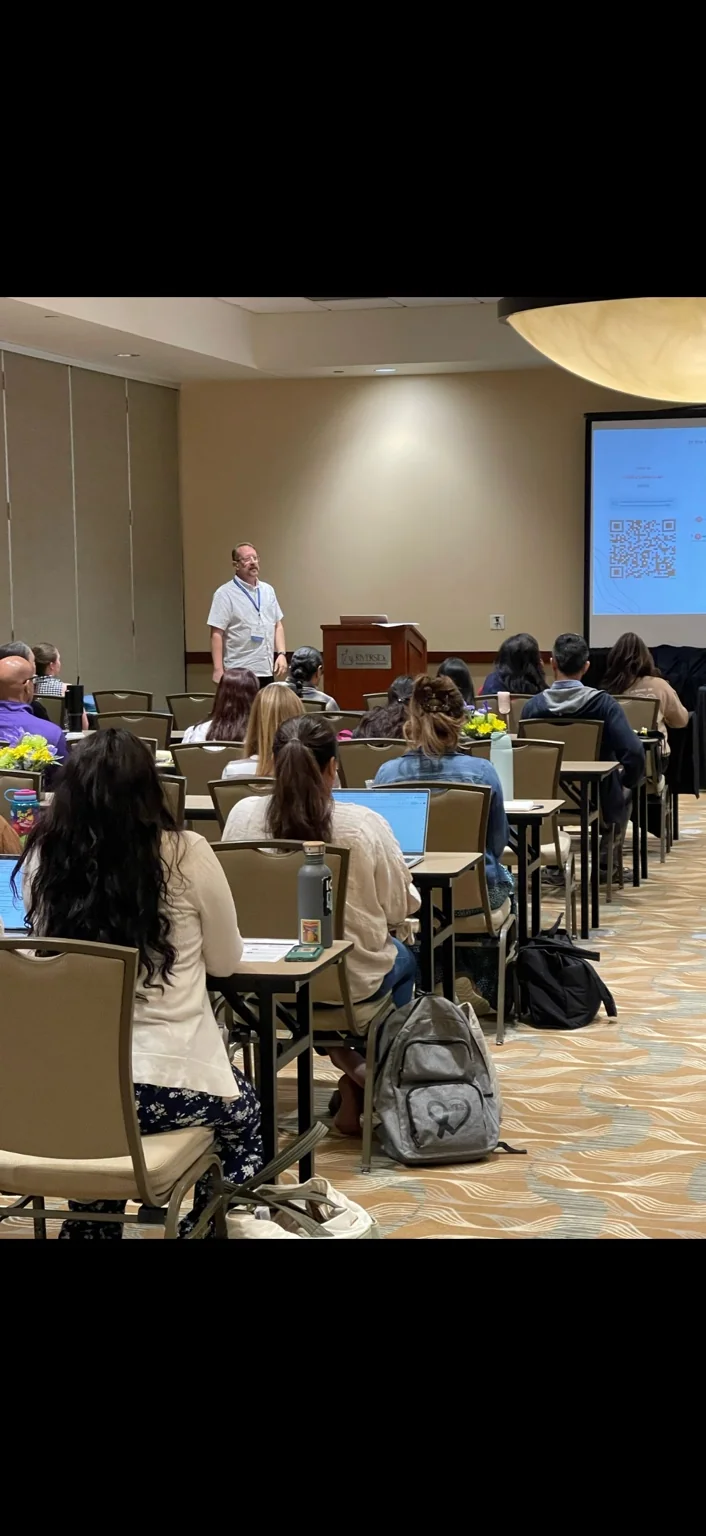
Dr. Palmer is a TEDx speaker, ADHD-Certified Educator, Certified Trauma Professional, and Certified Autism Informed Professional. He also brings lived experience as a neurodivergent adult and parent of neurodivergent children.
School leader resources
Use these practical guides to examine one recurring challenge with your team before deciding what support comes next.
See how mixed adult decisions weaken implementation and cost learning time.
Read the guide ↗Student shutdownReduce unnecessary pressure while preserving connection and the learning goal.
Read the guide ↗Professional learningMove staff from awareness to shared, practiced adult responses.
Read the guide ↗A focused first conversation
Bring the recurring challenge: shutdown, refusal, escalation, inconsistent adult responses, or a pattern that keeps taking learning time.
We will identify the most useful next step for your school or district.
