Check the plans already in place
Review the student’s IEP, 504 plan, behavior plan, and school safety procedures. Note the accommodations, supports, and staff roles that already apply. Ask the case manager or administrator about anything unclear.
 Dr. David A. PalmerRewire the Response™Book a Call
A practical resource for classroom teachers
Start with the free Six D’s Decoder: a quick reference for describing what you see and deciding what to discuss with your team.

Before students arrive
You do not need to solve every pattern before the day begins. Start with one recurring moment and the supports already agreed for that student.
Review the student’s IEP, 504 plan, behavior plan, and school safety procedures. Note the accommodations, supports, and staff roles that already apply. Ask the case manager or administrator about anything unclear.
Pick a recurring point in the day—such as starting independent work, a transition, or waiting. Identify one support already approved for that student, such as a clear first step, a visual cue, planned movement, or another way to access the task.
If a student pushes furniture, leaves the supervised area, or anyone may be unsafe, follow the student’s and school’s established procedures and contact the designated support staff. Confirm the plan with your administrator or case manager; do not improvise a separate safety plan.
Notice without labeling
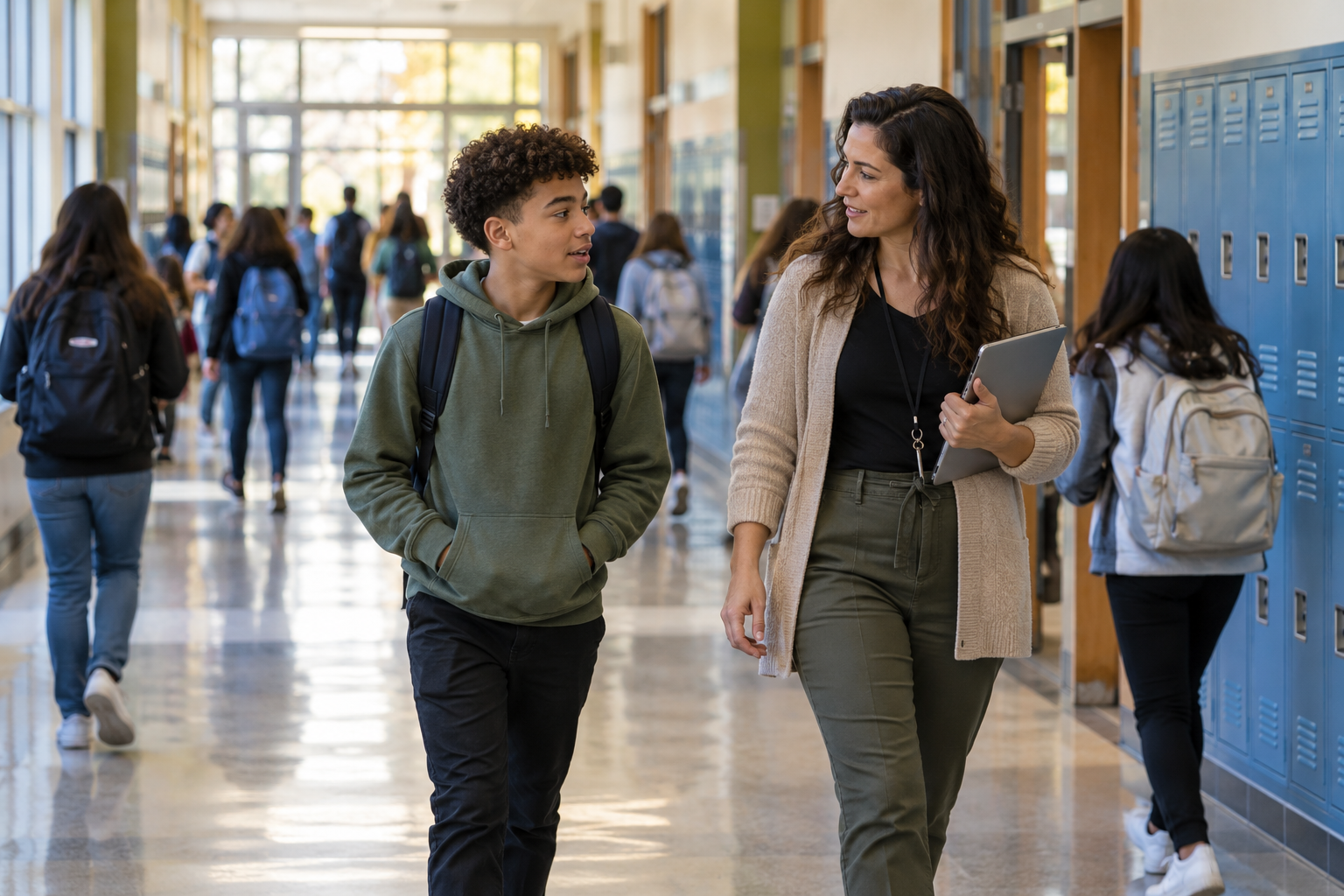
When several students need support at once, precise observations help the team work out what to adjust. A behavior description is a starting point for inquiry, not a diagnosis or explanation.
After the moment
Brief, neutral notes make it easier to compare patterns across settings and decide together what support to try next.

Record what happened just before, the actions you could see or hear, what adults did, and what happened next. Use neutral, specific descriptions instead of labels or guesses about intent.
Bring the notes to the case manager, special education team, or administrator. Ask whether the current supports fit the task, transition, environment, and level of support the student needs.
Choose the next step with the people responsible for the student’s plan. Decide who will try it, when, and what the team will watch for. Keep required safety procedures and accommodations in place.
A note you can use
Before: What was happening? Observed: What did the student do or say? Adult response: What support was offered? Next: What happened afterward?
Keep learning with the team
The free Six D’s Decoder offers a common vocabulary and classroom reference. Treat each pattern as a description to explore, not a label or a conclusion about why a student acted.
